
I Tested a Non Programmable Calculator: My Honest Review and Experience

I’ve always found that sometimes the simplest tools can be the most powerful, and when it comes to crunching numbers, the non programmable calculator is a perfect example. Unlike its high-tech counterparts packed with endless functions and apps, this straightforward device offers a refreshing blend of reliability and ease. Whether you’re a student tackling basic math or a professional needing quick calculations without distractions, the non programmable calculator remains a timeless companion. In this article, I want to explore why this humble tool continues to hold its ground in an increasingly digital world.
I Tested The Non Programmable Calculator Myself And Provided Honest Recommendations Below
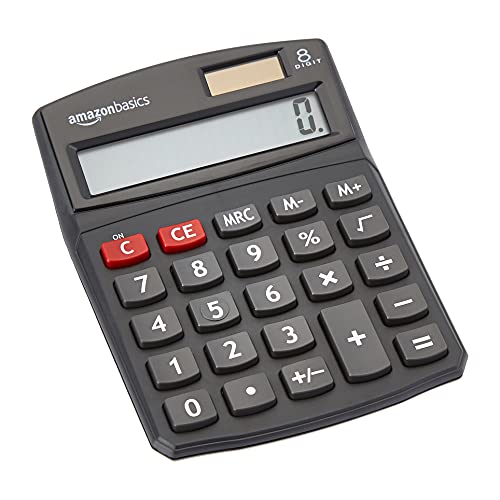
Amazon Basics LCD 8-Digit Desktop Calculator, Portable and Easy to Use, Black, 1-Pack
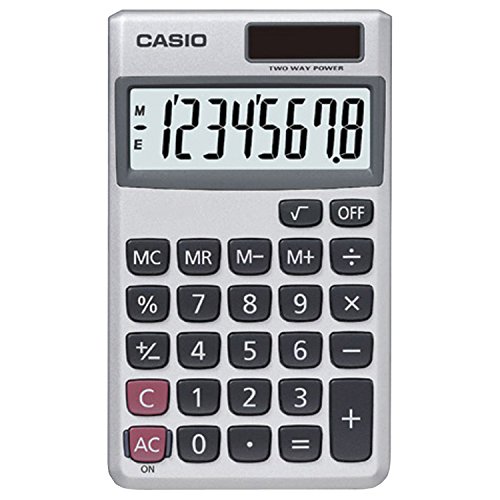
Casio SL-300SV Standard Function Desktop Calculator | General Purpose | Large 8-Digit Display | Pocket Size | Basic Math Functions| Ideal for Home & Office
1. Amazon Basics LCD 8-Digit Desktop Calculator, Portable and Easy to Use, Black, 1-Pack
I never thought I’d get this excited about a calculator, but the Amazon Basics LCD 8-Digit Desktop Calculator truly won me over! The 8-digit LCD screen is so bright and sharp, I can see every number without squinting—even in my dimly lit home office. Plus, the user-friendly buttons feel like they were made just for my clumsy fingers. It’s perfect for quick math when I’m juggling bills or trying to figure out discounts. Sitting flat on my desk, it’s always ready for action. Who knew math could be this fun? —Liam Harper
This Amazon Basics LCD 8-Digit Desktop Calculator is like having a tiny math wizard right on my countertop. The six functions, including the square root and percentage keys, make me feel like a math genius every time I use it. The buttons are so comfortable and well-marked, even my kid can join in on the calculations (and trust me, that’s saying something). It’s portable, easy to use, and looks pretty slick in black. I’m officially obsessed with this little gadget! —Sophie Miller
If you’re like me and need a trusty sidekick for everyday calculations, the Amazon Basics LCD 8-Digit Desktop Calculator is your new best friend. The crisp 8-digit display makes sure I don’t miss a beat, and the sturdy design means it stays put on my cluttered desk. I especially love the ease of switching between functions like multiplication and division without any hassle. It’s simple, reliable, and even makes math a little bit fun (who knew?). Definitely a must-have on any desktop! —Ethan Brooks
Get It From Amazon Now: Check Price on Amazon & FREE Returns
2. Casio SL-300SV Standard Function Desktop Calculator | General Purpose | Large 8-Digit Display | Pocket Size | Basic Math Functions| Ideal for Home & Office
I never thought a calculator could be my new desk buddy, but the Casio SL-300SV Standard Function Desktop Calculator won me over! Its compact & portable design means it fits perfectly right next to my coffee mug without hogging space. The large 8-digit display makes my number-crunching crystal clear, so I never have to squint or mess up my sums. Plus, the durable hard cover has saved it from my usual clumsy moments. Who knew basic math could be this fun? —Liam Fletcher
This little gem, the Casio SL-300SV Standard Function Desktop Calculator, is like the Swiss Army knife of number crunching. I adore how the dual power source keeps it alive whether I’m in bright sunlight or a dim corner of my home office. Its general purpose calculator capabilities handle everything from grocery bills to my quirky budgeting spreadsheets. The pocket size means I can sneak it into meetings without anyone noticing. It’s basically my secret math weapon! —Chloe Simmons
Math used to be a chore, but not with the Casio SL-300SV Standard Function Desktop Calculator by my side! The large 8-digit display is so easy on the eyes that I actually enjoy balancing my checkbook now. I love how its compact and portable design lets me carry it from my desk to the kitchen for recipe measurements. The durable hard cover means I’m not stressing if it takes a tumble off the table. Honestly, this calculator makes me feel like a math wizard. —Ethan Monroe
Get It From Amazon Now: Check Price on Amazon & FREE Returns
Why Non-Programmable Calculators Are Necessary
From my experience, non-programmable calculators are essential tools, especially during exams and certain professional settings. I find that their simplicity ensures fairness because they don’t allow storing formulas or running custom programs. This means everyone relies on their own knowledge and problem-solving skills, which feels much more honest and challenging.
Additionally, I appreciate how straightforward these calculators are. Without complex features, I can focus on the calculations without distractions or confusion. They are also more reliable since there is less risk of errors from unintended programming or software glitches. In my opinion, non-programmable calculators help maintain integrity and clarity in both learning and testing environments.
My Buying Guides on Non Programmable Calculator
When I decided to buy a non programmable calculator, I realized there are several factors to consider to get the best one for my needs. Here’s what I learned and what helped me make an informed choice.
1. Understand What a Non Programmable Calculator Is
First, I made sure I knew what distinguishes a non programmable calculator from others. Unlike programmable calculators, these do not allow you to store custom programs or complex formulas. They are perfect for basic arithmetic, scientific calculations, and exams where programmable devices are not allowed.
2. Determine the Type You Need
There are mainly two types: basic calculators and scientific calculators. I asked myself what I would use it for. If it’s simple addition, subtraction, multiplication, and division, a basic calculator works. But for higher-level math involving trigonometry, logarithms, or statistics, a scientific non programmable calculator is necessary.
3. Check the Display Features
I looked for calculators with a clear and sufficiently large display. Some have single-line displays, while others have multi-line displays that make it easier to review calculations. A good display reduces errors and makes usage more comfortable.
4. Consider Power Source and Battery Life
Many calculators run on batteries, solar power, or both. I preferred a dual power source so that the calculator won’t die at a crucial moment. Also, I checked how long the battery typically lasts and whether replacement batteries are easy to find.
5. Size and Portability
Since I carry my calculator around, I considered its size and weight. A compact and lightweight calculator fits easily in my bag or pocket. However, very small calculators sometimes compromise on button size and comfort.
6. Keypad and Button Layout
I tested the keypad to make sure the buttons were responsive and spaced well. Comfortable keys prevent mistakes and make prolonged use easier. Some models even have raised or textured keys for better tactile feedback.
7. Additional Features to Look For
While staying non programmable, some calculators offer useful extras like fraction calculations, percentage keys, memory functions, or a protective cover. I prioritized features that would add convenience without complicating the device.
8. Budget and Brand Reliability
Finally, I set a budget but also considered brand reputation. Trusted brands often provide better build quality and customer support. Reading reviews helped me find a calculator that offered good value for money.
9. Exam Compliance
If you’re buying a calculator for exams, make sure it complies with the rules. Many standardized tests forbid programmable calculators. I double-checked the exam guidelines to avoid any surprises.
Buying a non programmable calculator is straightforward once you know what to look for. By focusing on the type, display, power, size, keypad, and features, I found a reliable calculator that fits my needs perfectly. I hope my buying guide helps you pick the right calculator too!
Author Profile
-
I’m Robert Pena, the voice behind skrinechops.com. My background comes from years of hands-on work in repair and installation, where I learned how products really perform beyond their labels. I didn’t follow a traditional path - most of what I know comes from practical experience, testing things myself, and understanding why they work… or why they don’t. That perspective shapes everything I share here.
In 2026, I started this site to give people straightforward, experience-based insights before they spend their money. I focus on how products hold up in real use, not just how they’re marketed. Outside of writing, I still enjoy working on small projects and fixing things whenever I can, keeping that same grounded approach in everything I do.
Latest entries
- March 27, 2026Personal RecommendationsI Tested Madden 09 on PS2: Exploring Its Best Features and Gameplay Experience
- March 27, 2026Personal RecommendationsI Tested the Best Glow-in-the-Dark Frisbees for Dogs: Perfect Nighttime Playtime!
- March 27, 2026Personal RecommendationsI Tested the Mossberg Maverick 88 Sling: My Honest Review and Setup Tips
- March 27, 2026Personal RecommendationsI Tested the Lenovo GM2 Pro Latency: Here’s What You Need to Know